Dive Team Surveys (DOT & PHMSA Compliant)
You can trust our ADCI qualified team of divers to perform each survey with a high level of expertise and efficiency.
Dive Team Surveys
Underwater pipeline inspections and dive team surveys have been Central States Underwaters specialty since our inception 50 years ago. You can trust our ADCI qualified team of divers to perform each survey with a high level of expertise and efficiency.
Underwater pipeline inspections are a crucial process to ensure the safety and integrity of pipelines that are submerged underwater. Along with visual inspections, pipeline inspections may include depth of cover surveys done by Central States Underwaters ADCI qualified team of divers to ensure that pipelines are buried at a safe depth below the seabed.
Pipeline inspections with DOT and PHMSA compliance are essential for ensuring that pipeline systems meet the safety standards set by the US Department of Transportation and the Pipeline and Hazardous Materials Safety Administration. These inspections are a regulatory requirement for pipeline owners and operators and involve a range of inspection methods. Inspection results must be reported to the DOT and PHMSA, and any necessary repairs or maintenance must be completed in a timely manner to ensure the safety of pipelines and prevent accidents or incidents that could harm the environment or public safety.
Central States Underwater provides comprehensive underwater pipeline inspection services that meet DOT and PHMSA compliance standards, including visual inspections, depth of cover surveys, and other inspection methods to ensure the safety and integrity of your pipeline systems. Other types of inspections and surveys CSU specializes in include:
-
Pipe and Cable Tracking
-
Right of Way Surveys
-
Site Utility Surveys
-
Geophysical Surveys
-
Cathodic Protection Surveys
-
As-Built Surveys
Need an underwater pipeline survey done that you don’t see stated above? We’ve probably done it before! Give CSU a call to discuss your underwater inspection needs and get a quote today.
Diver Safety
Comprehensive Pre-Dive Preparation
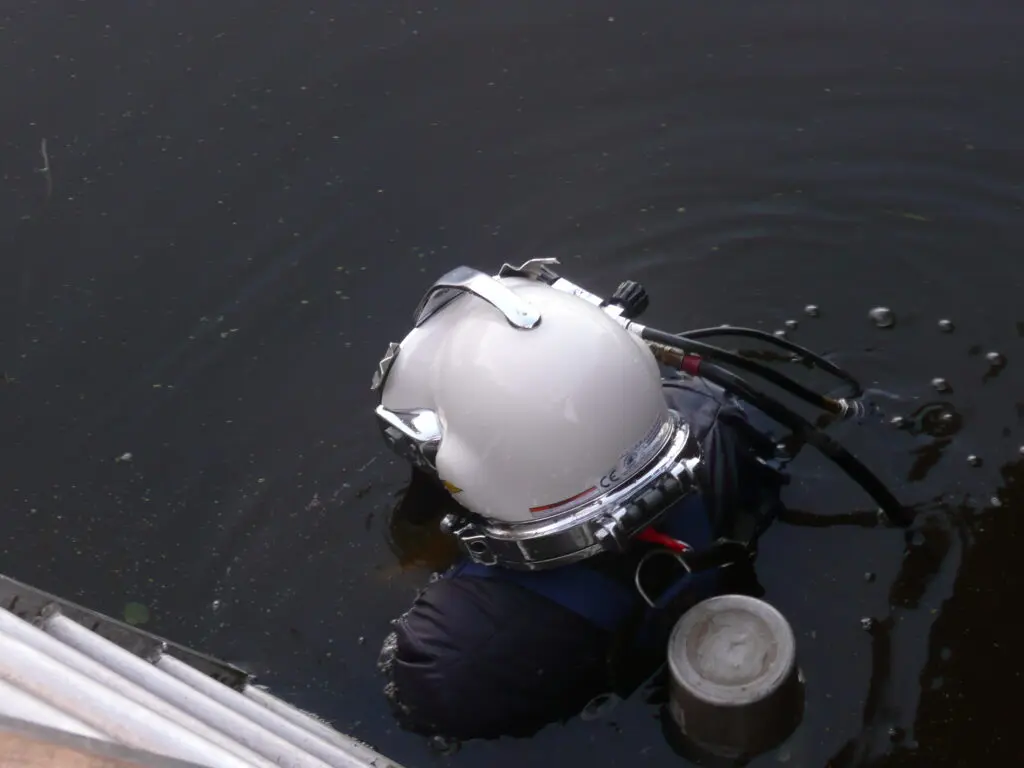
Before any dive begins, the team engages in rigorous pre-dive planning and briefings to evaluate water conditions, establish objectives, and review safety protocols. This phase also requires a strict equipment inspection to ensure all breathing apparatuses, communication tools, and safety harnesses are functioning perfectly for the specific pipeline task.
Continuous Communication and Teamwork
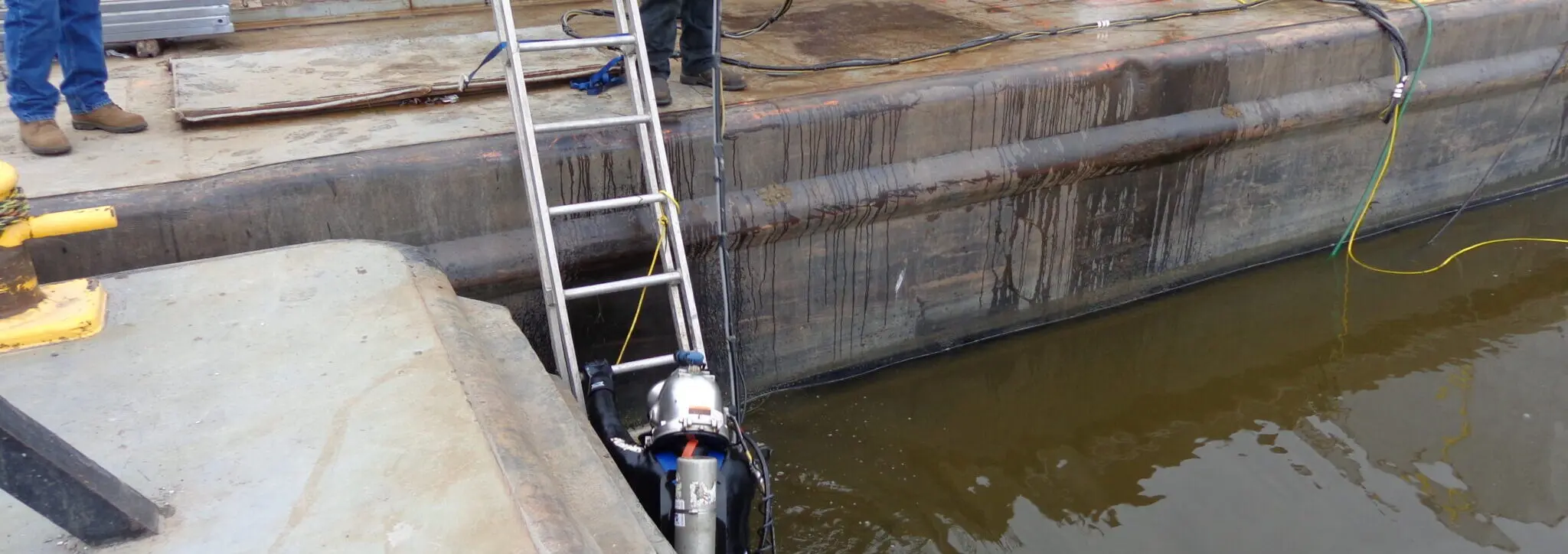
Safety relies heavily on a coordinated human effort, which is why ADCI-certified divers always operate in teams of four to guarantee constant mutual monitoring. Throughout the inspection, divers maintain continuous communication with both their teammates and the surface crew using underwater radios and hand signals to share updates and immediately address any concerns.
Active Hazard Mitigation and Life Support
While underwater, divers actively manage their physiological and environmental safety by closely monitoring their gas supply and adhering strictly to safety stops and decompression protocols during ascents. Simultaneously, they are trained to exercise extreme caution, actively identifying and mitigating physical hazards such as entanglement risks, sharp edges, or marine life around the pipeline.
Emergency Readiness and Post-Dive Review
To ensure resilience against unexpected events, the team maintains robust emergency response plans and equips divers with emergency gas and signaling devices to handle contingencies like entrapment or equipment failure. Following the operation, a thorough post-dive assessment is conducted to review the mission, capture lessons learned, and continually improve safety and efficiency for future dives.